
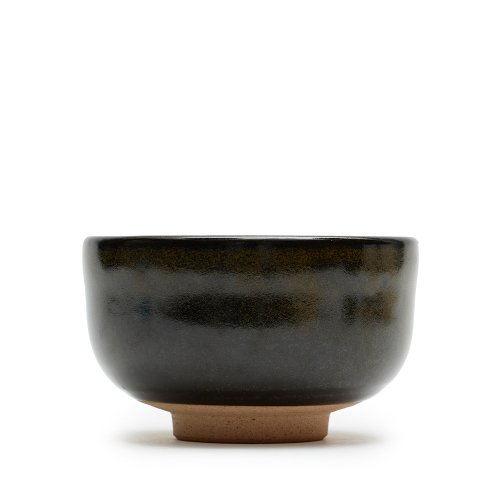
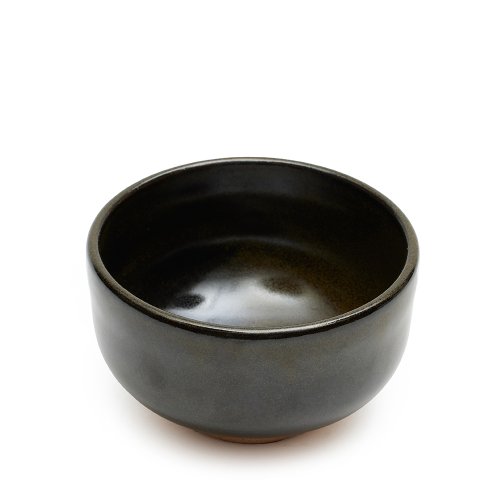


The tea bowl, known as a Chawan or Matchawan (抹茶碗, literally: "matcha tea bowl") in Japanese, originated in China and began to be imported to Japan in the 13th century. To this day, the Chawan is used in the Japanese tea ceremony to serve Koicha: a thick, dark tea made with the finest matcha, as well as Usucha: a thinner, frothier, diluted version – and how matcha is typically prepared for everyday drinking. Chawan come in a variety of shapes and regional styles, sometimes with the addition of seasonal motifs, making them popular collectors' items.
Matcha Bowl
Kuro
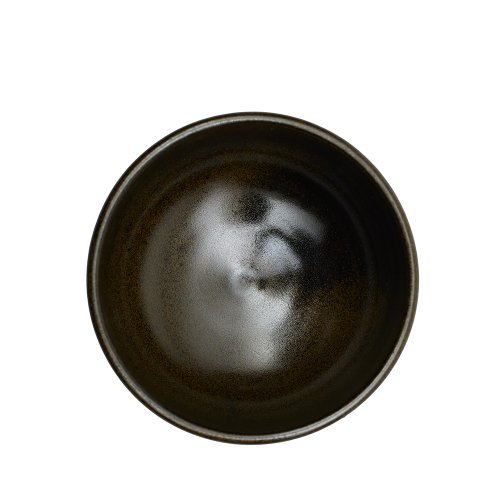
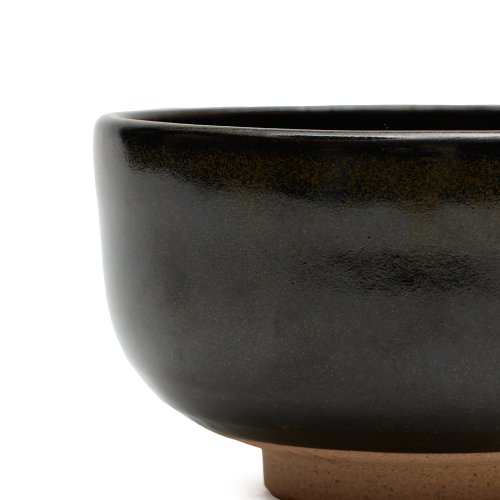
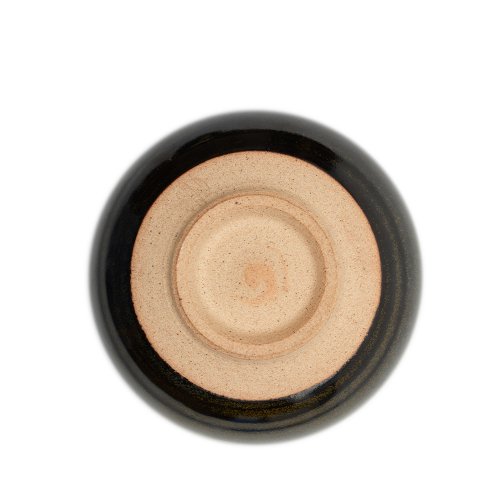
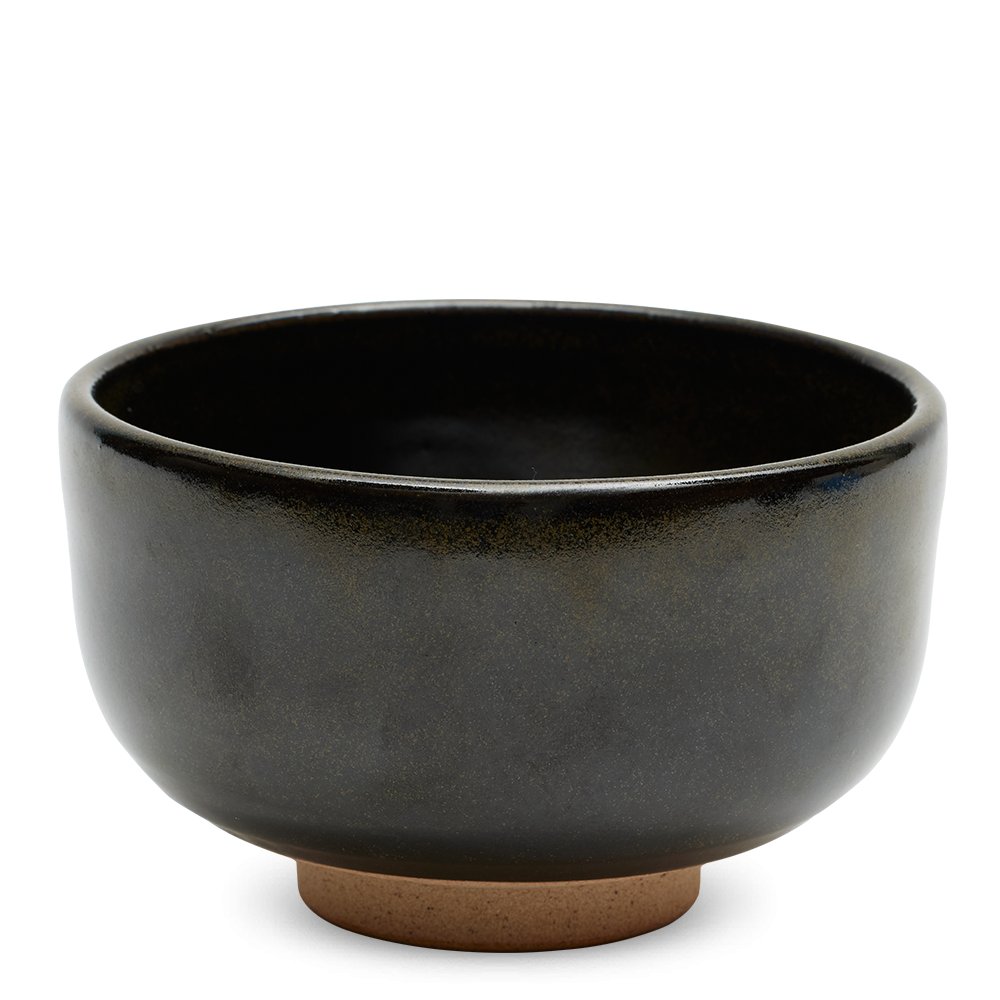
Sleek black Chawan matcha bowl covered in a thick, smooth coat of glaze. Handcrafted for us exclusively in Japan, the unglazed footring is stamped with the Yoshi en seal. Suitable for daily use as well as tea ceremonies.
| Item | Matcha tea bowl |
| Colour | Black |
| Origin | Yokkaichi, Mie, Japan |
| Style | Banko-yaki |
| Dimensions | Ø12cm x 7.5cm |
| Material | Clay |
| Shape | Wan-nari (椀形 "bowl shaped") |
| Packaging | Gift box |
€28.90
Chawan 茶碗

Banko-yaki 萬古焼
Merchant and passionate Chajin (“tea person”), Nunami Rozan, is credited as the founding father of Banko-yaki. Back in the 18th century he opened a kiln in what is now Asahi-machi, Mie prefecture, stamping his wares with 萬古不易 – <i>banko-fueki:</i> “eternally unchanging” – in the hope that his ceramics would be passed down across generations. Today Banko-yaki is still produced in the Mie prefecture, primarily in the city of Yokkaichi, and is a protected traditional craft of Japan.

Application
To prepare a light, frothy matcha, use a chashaku bamboo scoop to place two heaped portions (approx. 2g) of matcha powder into a tea bowl. For a particularly fine result, it is recommended to first pass the powder through a fine sieve. Then, carefully pour approximately 80ml of hot water (60°C to 80°C) into the bowl—avoid pouring the water directly onto the powder to prevent clumping.
Now, place the chasen matcha whisk vertically (at about a 90° angle) into the bowl and then move the whisk back and forth quickly but gently in a tight zigzag motion. If possible, avoid contact with the bottom and sides of the bowl, and avoid circular movements, in order to create the typical matcha foam. The faster you whisk, the finer and airier the foam will become. Practice makes perfect.

Care
Wash by hand with warm water and a soft cloth or sponge, then dry with a tea towel. Do not put in dishwasher.