Magnesium Complex 11 Ultra
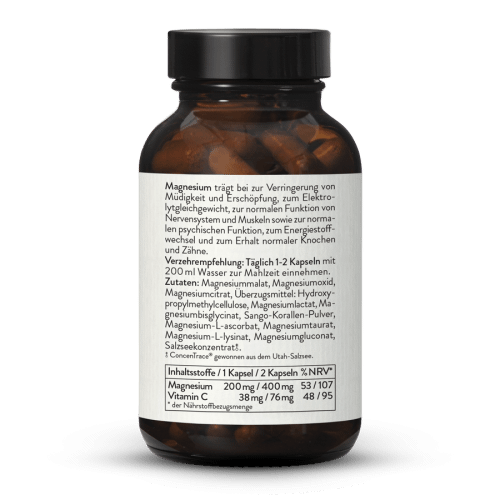
Magnesium Glycinate
Magnesium glycinate is bound to the amino acid glycine, which can be found in large amounts in connective tissue and in the brain. Magnesium glycinate is considered to be one of the most bioavailable magnesium compounds, and it contributes to normal protein synthesis, normal functioning of the nervous system and normal psychological function.
Magnesium Taurate
Magnesium taurate is bound to the amino acid taurine. Large amounts of taurine can be found in muscle, eye tissues and the brain. Magnesium taurate contributes to the reduction of tiredness and fatigue, normal protein synthesis and normal muscle functioning.
Magnesium Lysinate
Magnesium lysinate is a form of magnesium bound to the amino acid lysine and is characterised by the special properties of L-lysine as well as its extremely good solubility; the combination of these characteristics particularly promotes absorption.
Magnesium Citrate
Magnesium citrate is magnesium bound to citric acid and comes in two forms: magnesium hydrogen citrate with only 6–7% magnesium or high-quality tri-magnesium dicitrate with a high magnesium content of 10–15%. For our magnesium complexes, we exclusively use high-quality tri-magnesium dicitrate as an anhydrous anhydrate with a particularly high magnesium content of 14.5%. Magnesium citrate is base-forming and contributes to normal energy metabolism, normal muscle function, electrolyte balance and normal protein synthesis.
Magnesium Malate
Magnesium malate is a salt of malic acid and contributes to normal energy metabolism, the reduction of tiredness and fatigue and normal functioning of the nervous system.
Magnesium Gluconate
Magnesium gluconate is a salt of gluconic acid, which can be found in kombucha. Magnesium gluconate is highly bioavailable and contributes to normal energy production metabolism, normal nervous system functioning and cell division.
Magnesium Lactate
Magnesium lactate is an organic compound of magnesium with dextrorotatory lactic acid (lactate). Dextrorotatory lactic acid is a particularly natural metabolic product of humans and is also produced by lactic acid bacteria. Lactate is a component of the acid mantle of the skin as well as of the lactic acid intestinal environment; it nourishes butyrate-forming intestinal bacteria and is an important energy supplier for the cells of the intestinal mucosa.
Magnesium Ascorbate
Magnesium ascorbate, also known as buffered vitamin C, is a salt of ascorbic acid (vitamin C). It is very well tolerated and exhibits high bioavailability.
ConcenTrace® Mineral Concentrate
The natural mineral concentrate Concentrace®, derived from the water of the unique Great Salt Lake in Utah (USA), contains 72 naturally occurring ionic minerals and trace elements. It includes 36% magnesium chloride in conjunction with other minerals and trace elements that act as natural cofactors. Due to its rich, natural composition and ionic form, the mineral concentrate exhibits very high bioavailability.
Magnesium Oxide
Magnesium oxide stands out with an impressive 57% magnesium content, far surpassing the typical 5–10% found in other magnesium compounds due to the single oxide atom bond. The chemical reaction between magnesium oxide and the hydrochloric acid present in the stomach produces magnesium chloride and water, thereby neutralising stomach acidity at high doses. This characteristic makes it less advisable for individuals with low stomach acid levels.
Sango Coral
Sango coral contains bioidentical organic calcium carbonate and magnesium carbonate, two compounds known for their remarkable bioavailability. This natural coral offers an optimal calcium to magnesium ratio of approximately 2:1, allowing the body's cells to absorb these compounds particularly well.
According to the European Food Safety Authority (EFSA):
Magnesium contributes to:
- Reduction of tiredness and fatigue
- Electrolyte balance
- Normal energy-yielding metabolism
- Normal functioning of the nervous system
- Normal muscle function
- Normal protein synthesis
- Normal psychological function
- The maintenance of normal bones
- The maintenance of normal teeth
- Cell division