
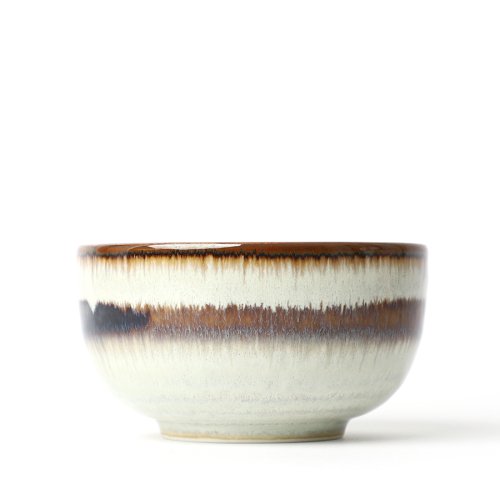
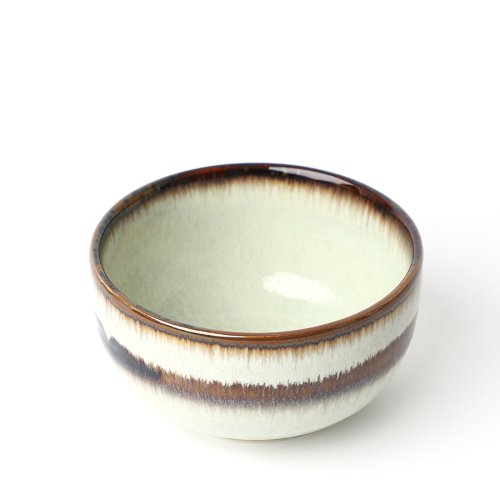


The tea bowl, known as a Chawan or Matchawan (抹茶碗, literally: "matcha tea bowl") in Japanese, originated in China and began to be imported to Japan in the 13th century. To this day, the Chawan is used in the Japanese tea ceremony to serve Koicha: a thick, dark tea made with the finest matcha, as well as Usucha: a thinner, frothier, diluted version – and how matcha is typically prepared for everyday drinking. Chawan come in a variety of shapes and regional styles, sometimes with the addition of seasonal motifs, making them popular collectors' items.
Japanese
Matcha Bowl
WABI-SABI
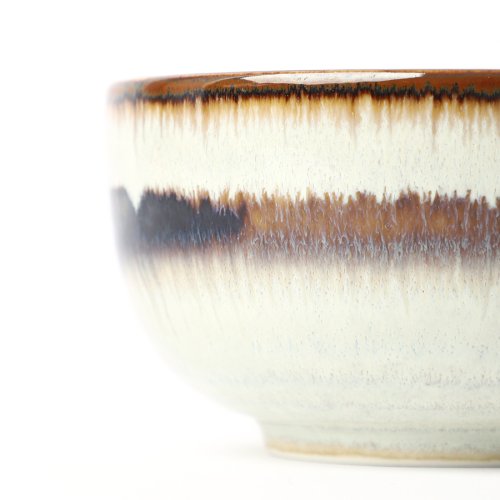
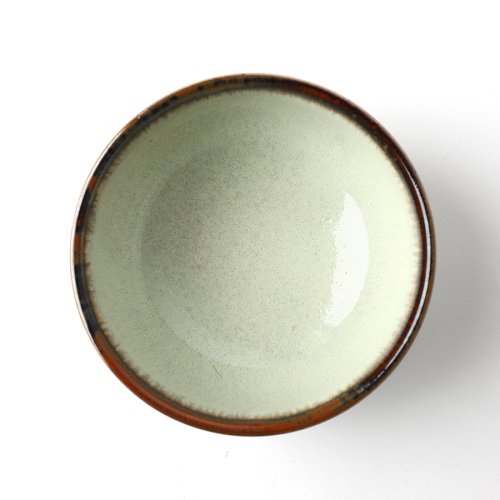
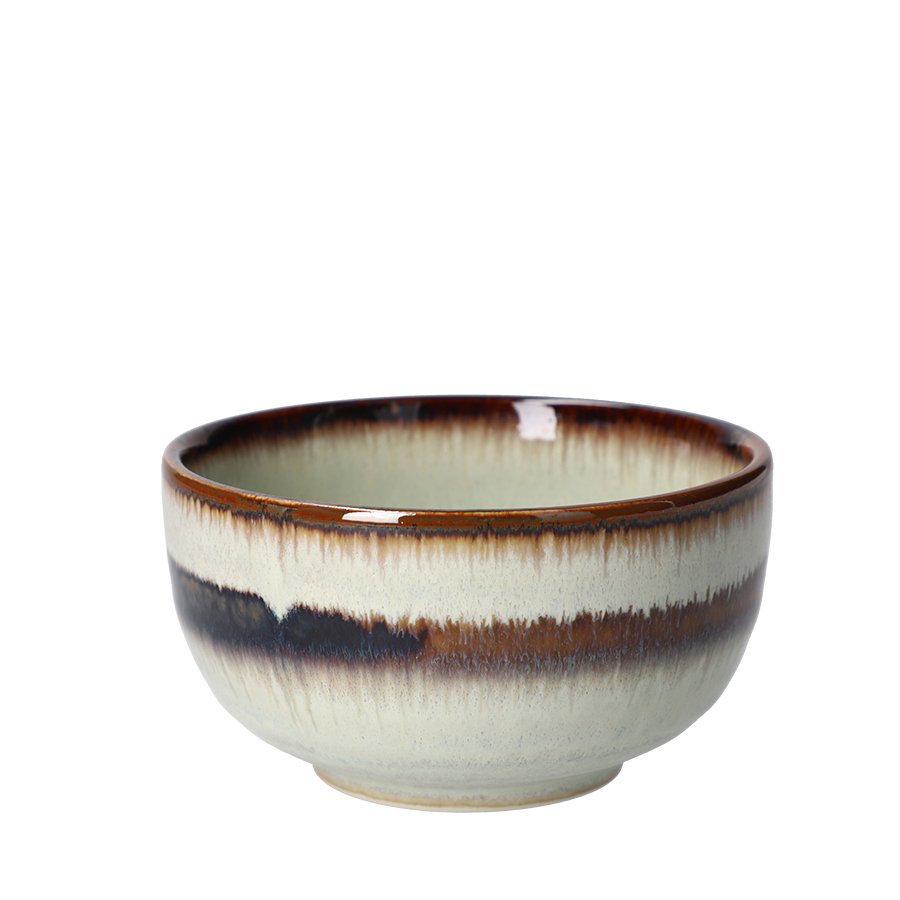
Authentic Japanese Chawan Matcha bowl in a mother-of-pearl glaze banded with brown. Suitable for preparing Matcha, as well as powdered Hojicha, for everyday enjoyment.
| Type | Mino-yaki Chawan tea bowl |
| Studio / Artist | Handmade in a renowned Japanese studio |
| Origin | Gifu, Japan |
| Colour / Glaze | Mother of pearl outer, golden brown inner |
| Material | Ceramic |
| Shape | Wan-nari (椀形) |
| Dimensions | Ø12.8 x 7cm |
| Weight | 350g |
| Packaging | Black gift box |
€17.90
Chawan 茶碗

Mino-yaki 美濃焼
Produced in the historic Mino province, present-day Gifu prefecture, Mino-yaki has a long ceramic history dating back to the 11th century, and since the 19th century has specialised in porcelain for everyday crockery. Mino ceramic production developed in correlation with that of Seto, in neighbouring Aichi prefecture, where one of the legendary Six Ancient Kilns of Japan was located. A variety of styles and glazing techniques were produced in Mino following the Japanese tea ceremony, or Chanoyu, boom in the Momoyama period (1573–1615), including yellow Kiseto, black Setoguro and Tenmoku glazes, as well as Shino and Oribe wares.

Care
Wash with warm water and a mild detergent when necessary. Avoid placing in dishwasher or microwave.