

- Alfalfa sprouts: rich in proteins, vitamins, minerals and the amino acids tryptophan and tyrosine
- As a result of germination:
- More bioavailable nutrients
- Reduced phytic acid content
- Gluten-free
- Easily digestible
- Reduced allergen content
- Certified organic farming and processing in the EU
- Premium natural seeds
- 100% pure raw food
- Rich in fibre
Organic Alfalfa Sprouts
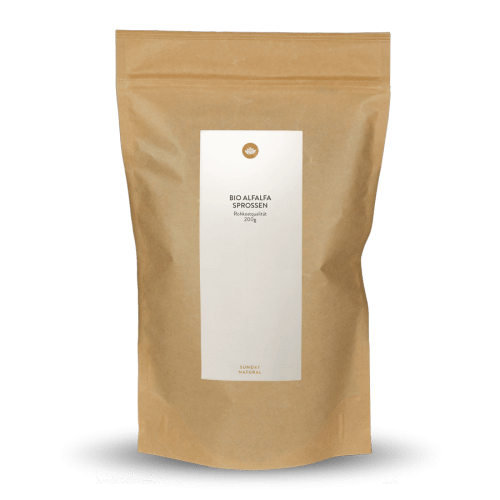
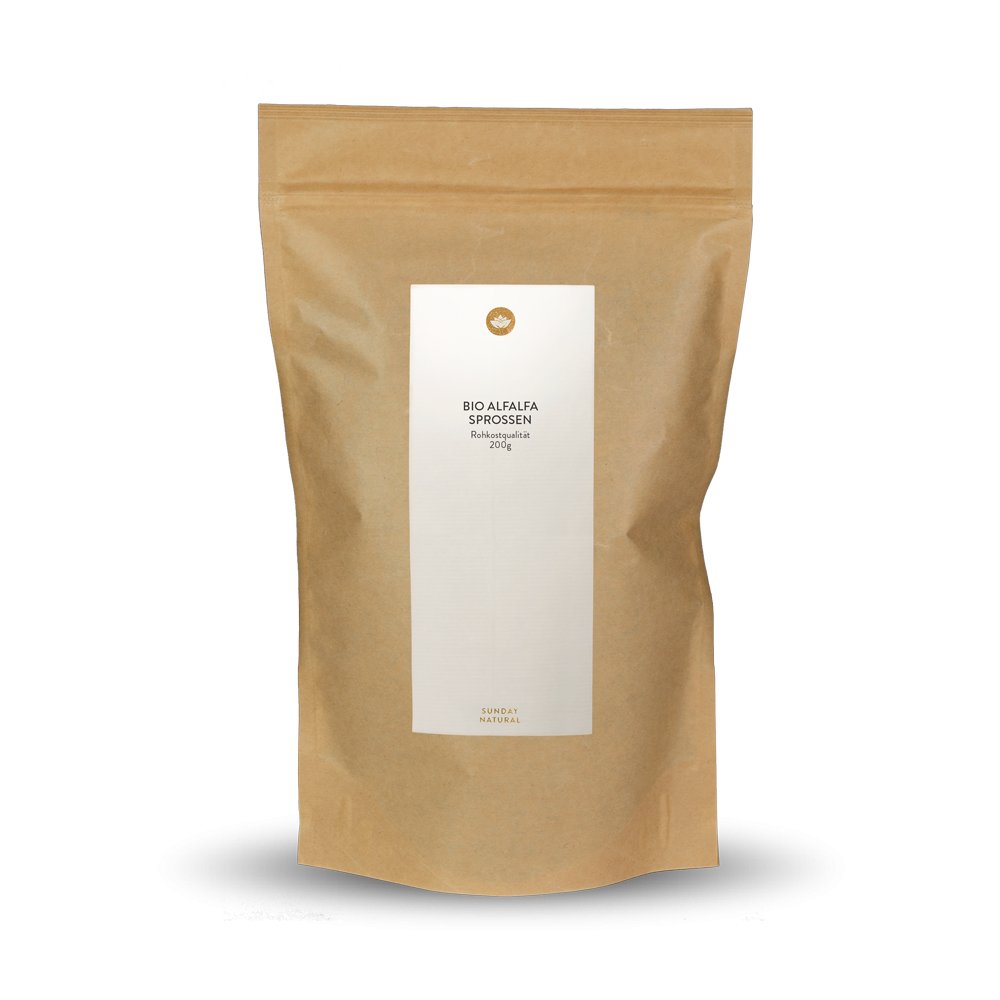
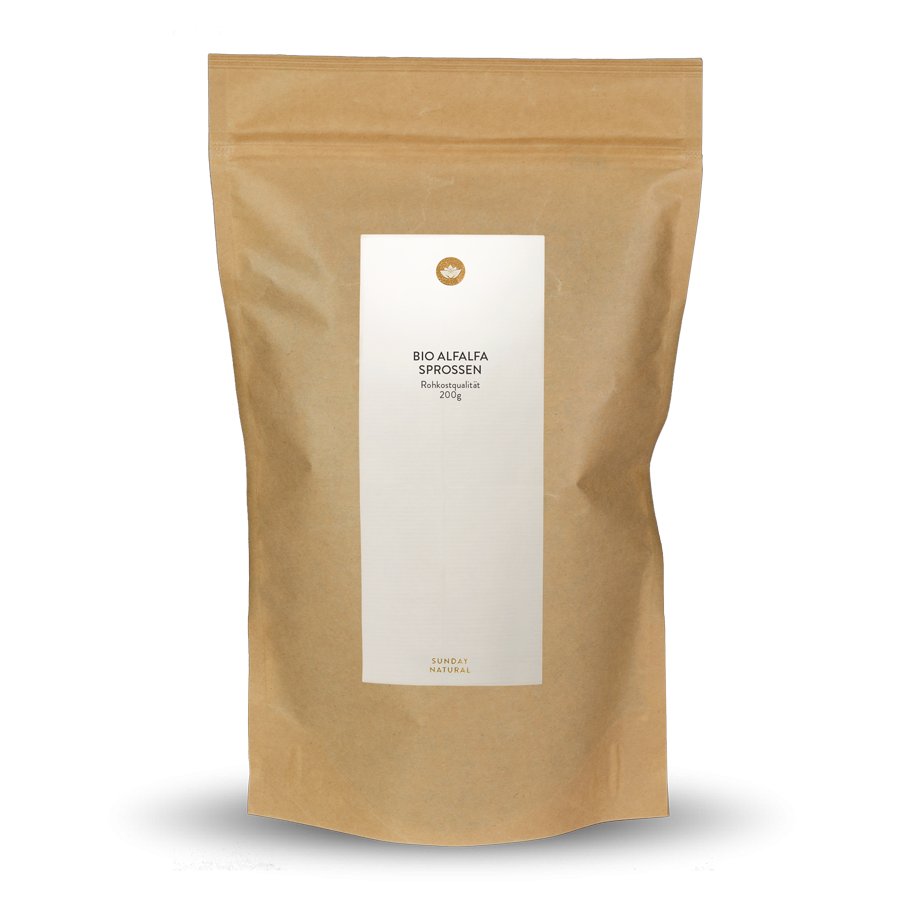
Organic alfalfa sprouts. Raw and 100% natural. Because they are sprouted, the alfalfa sprouts are especially rich in highly bioavailable nutrients, yet have reduced phytic acid content. The sprouts are easily digestible because they are gluten-free and high in fibre. Grown and processed in the EU. 200g
- Alfalfa sprouts: rich in proteins, vitamins, minerals and the amino acids tryptophan and tyrosine
As a result of germination:
- More bioavailable nutrients
- Reduced phytic acid content
- Gluten-free
- Easily digestible
- Reduced allergen content
- Certified organic farming and processing in the EU
- Premium natural seeds
- 100% pure and raw
€9.90
Finest Origin - Highest Grade
How are we different?
Our sprouted seeds are organically cultivated and sprouted in the EU.
The alfalfa is grown in secluded natural areas, and we ensure that the seeds remain in their natural state: completely free from additives such as sugar, flavourings and preservatives.
The seeds are 100% gluten-free and suitable for individuals with gluten allergies and sensitivities.

- Premium active ingredients in their purest form, sourced directly from the world’s best producers
- Select raw materials as the basis of all our formulations
- Our commitment: complete avoidance of all unnecessary additives, technical excipients and chemical extraction agents
- If additives are needed, valuable natural ingredients are prioritised
- Voluntary disclosure of every ingredient
- In-house production to achieve our high standards of purity and quality
- High-quality custom production of liquid products and (functional) foods as well as tablets by selected partners
- Packaging and encapsulation in Germany and the EU according to HACCP, GMP and ISO 22000:2018 standards
- Independent laboratory tests available on the product page
- Vegan capsule shells 100% without PEG or carrageenans
- Amber glass or high-quality, resealable bags featuring an aroma barrier to protect against oxidation and contamination used for packaging
- Storage in amber glass or product-specific, food-safe containers according to EC 10/2011
- Shipping boxes made from safe, sustainable materials
- All products 100% free from magnesium stearate, nanoparticles (no legal opportunism), titanium dioxide, genetic engineering and artificial colours and flavours
- Sugar or sweeteners deliberately added only when necessary, such as for functional or product-specific reasons

Alfalfa
Alfalfa (Medicago sativa, Lucerne)
Alfalfa is not just a fad in modern health trends, but rather a plant with a long history, which has its origins in Asia. The plant was first cultivated in Iran, then later by the Greeks and Romans. Spanish colonists brought the plant to the Americas, where much of the world's alfalfa is grown today. This superfood is rich in proteins as well as vitamins A, B, and K, and also contains small amounts of calcium, potassium, magnesium, iron, zinc, and phosphorus. Alfalfa has a particularly high concentration of the amino acids tryptophan and tyrosine; the latter is a precursor for the synthesis of the thyroid hormones T3 and T4.
Phytic Acid: a "Mineral Thief"
Phytic acid occurs naturally alongside other nutrients and fibres in seed shells. It is sometimes referred to as a "mineral thief" because it binds closely to minerals and trace elements such as zinc, iron, calcium, and magnesium. Phytic acid does not just form bonds with the minerals in seeds, but also binds itself to the minerals contained in any other foods consumed at the same time. This effect can be observed in phytate-rich foods such as whole grains and nuts. Phytic acid in sprouted seeds, however, gets broken down, meaning its effects are reduced.

Sprouting
What Happens When Seeds Sprout?
The sprout, contained inside the seed, contains all the components required for growing into a plant. If the seed is placed in water, its weight increases and it begins to come to life. Plant hormones and enzymes are activated that convert the seed's amino acids, fats, and carbohydrates to make them available. Sugar compounds are made from starch, protein from amino acids, and fatty acids from fats. Moreover, during the germination process, vitamins (C, E, K and B) as well as omega-3 fatty acids are produced. Toxic substances and substances that inhibit digestion such as phytic acid are broken down in this process.
The taste of the seed changes when it sprouts. The breakdown of starch into short-chain sugars (disaccharides) yields a slightly sweet and aromatic flavour. Sprouted seeds are easier to digest and, even when consumed in larger quantities, are not heavy in the stomach.
The Best Qualities of the Seed
Sprouted seeds have numerous nutritional benefits, such as:
- Improved bioavailability of nutrients
- Supply of folate, iron, magnesium, zinc
- High content of vitamins (C, E, K, B vitamins)
- Easily digestible
- Positive influence on intestinal flora
- Breakdown of bloating substances
- Breakdown of phytic acid
- Breakdown of tannins
- Activation of enzymes
- Alkaline effects
- Increased omega-3 content
- Increased bioavailability and value of proteins
- Increased amino acid content
- Increased fibre content
- Increased enzyme activity
- Increased antioxidant levels
- Reduced gluten and allergen content
- Reduced calories

Nutritional Values
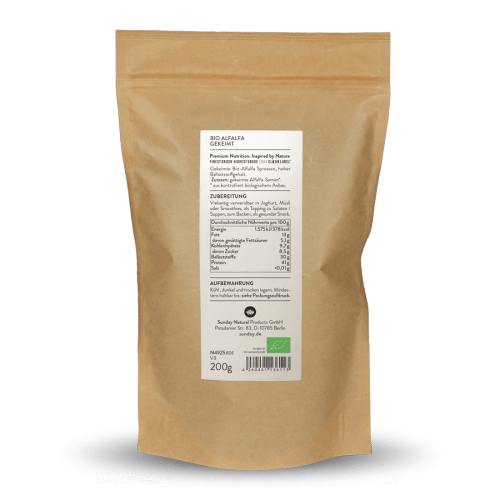
Ingredients: Organic Alfalfa, naturally sprouted.
Contains: 200g
| Average Nutritional Values / 100g | |
| Energy | 1,575kJ / 378 kcal |
| Fat | 13.0g |
| of which saturated fatty acids | 5.1g |
| Carbohydrate | 9.7g |
| of which sugars | 8.5g |
| Fibre | 30.0g |
| Protein | 41.0g |
| Salt | |
Origin
Cultivated and sprouted in the EU.
Organic Certification

PL-EKO-01
EU-Landwirtschaft
only one ingredient
gluten free
non-GMO
raw food
soya free
True Clean Label
vegan

made in the EU
lactose free

Dosage
Preparation
Can be added to smoothies, cereal, yoghurt, dips, soups, and salads, or eaten alone as a snack.
Suitable for individuals following a healthy diet, as well as for athletes and those with allergies.
Storage
Store in a cool, dry place away from direct sunlight and heat.
Packaging
High quality, airtight, resealable standing zipper pouches to preserve flavour and protect against oxidation and contamination.

Laboratory Tests
The purity of our formulas is important to us. This is why we have both our raw ingredients as well as our finished products extensively tested by independent laboratories to confirm purity and active ingredient content. Here, we have provided the results of some of the tests carried out on this product.

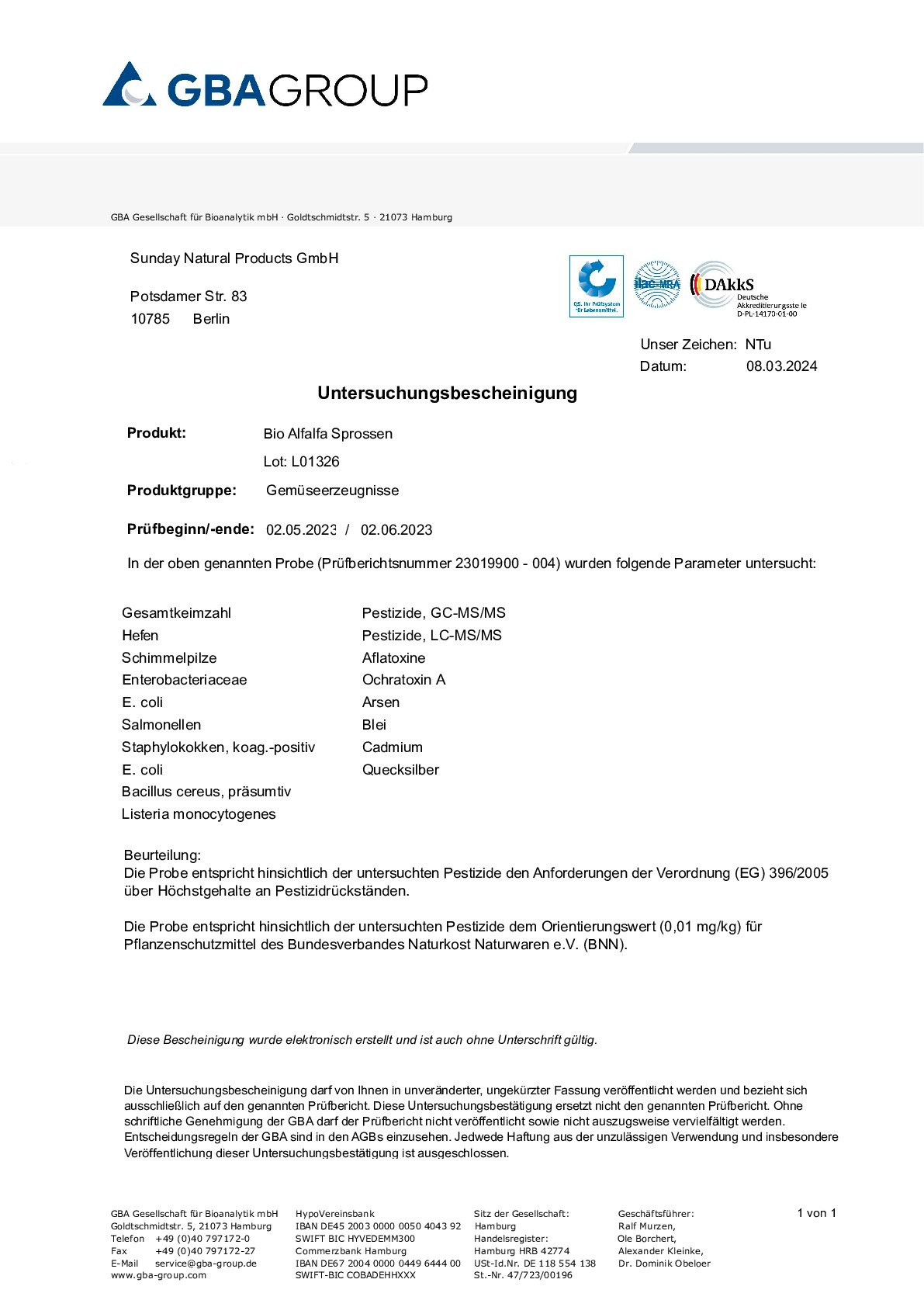
Sunday Natural
Our philosophy
For thousands of years, cultures all over the world have been using a variety of plants and nutritious foods to naturally foster vitality and good health.
With our products, we try to emulate this ancient wisdom as much as possible.
Consequently, our philosophy is simple: in everything we produce, we strive for the highest standards of quality and purity, with a focus on organic and natural ingredients.
We follow this philosophy with meticulous care on all levels, down to every last detail.