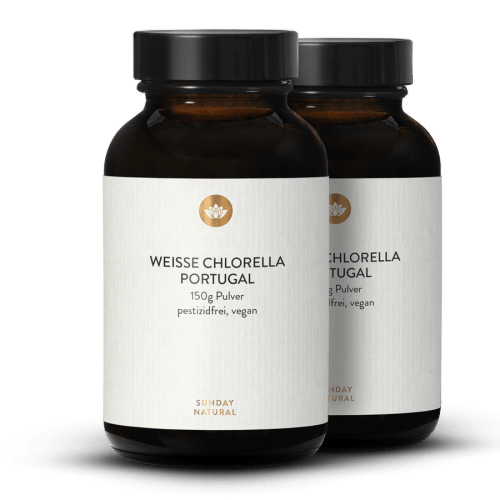
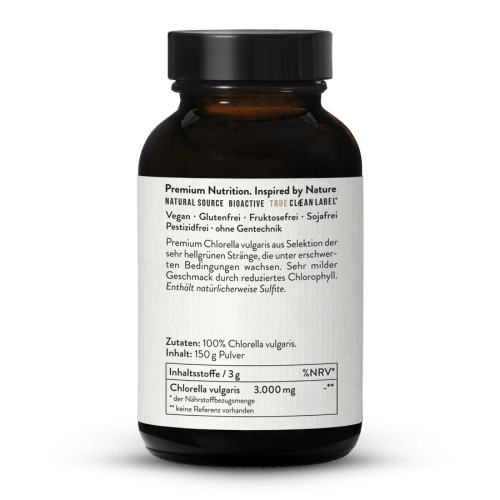
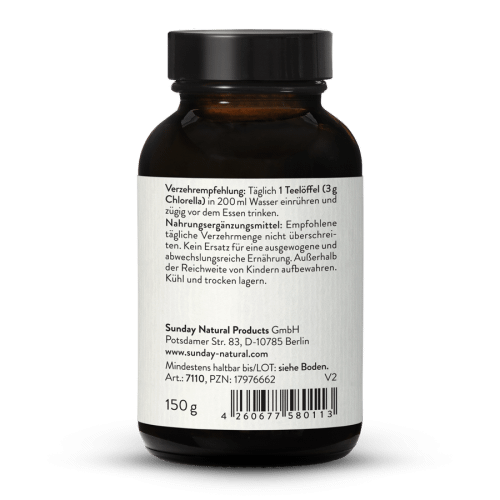
We source our natural white chlorella from our partner farm in Portugal. The heterotrophic cultivation of this popular microalgae is a sustainable process which does not even require sunlight, while the closed production process enables the farm to produce a premium, guaranteed pollutant-free product all year round.
To grow white chlorella, virtually devoid of chlorophyll, the farm first selects for light-coloured strains. The heterotrophic growth process then consists of propagating the selected strains in a working cell bank (WCB) and then allowing their growth to continue in closed bioreactors (fermenters) which shield the algae from light as well as ensure the absence of CO₂. By restricting sunlight and carbon dioxide, the algae are forced to use other carbon sources to grow, such as acetic acid or sugar. The heterotrophic cultivation itself takes place in two fermenters; the microalgae is first placed in a smaller 5L fermenter until it reaches a volume sufficient for the bigger 5,000L fermenter. Once ready for harvesting, the microalgae biomass is washed via microdiafiltration, which concentrates the culture. From then on, the white chlorella is processed and stored without any exposure to light.
The concentrated culture is then quickly pasteurised using very high temperatures. This step serves to destroy any vegetative pathogens or other microbes in the culture. The final step is to create the fine, whitish-green powder—via spray drying, the high quality of this unique white chlorella is preserved. No plant protection products or artificial fertilisers are used in this process.
Our partner farm in Portugal is a pioneer in the field of modern and sustainable algae cultivation and the leading European producer of premium microalgae. Their state-of-the-art green technologies form a unique intersection between innovation and sustainability, and they follow the most stringent quality standards. The heterotrophic cultivation of this premium chlorella is conducted entirely without genetic engineering or the use of pesticides.