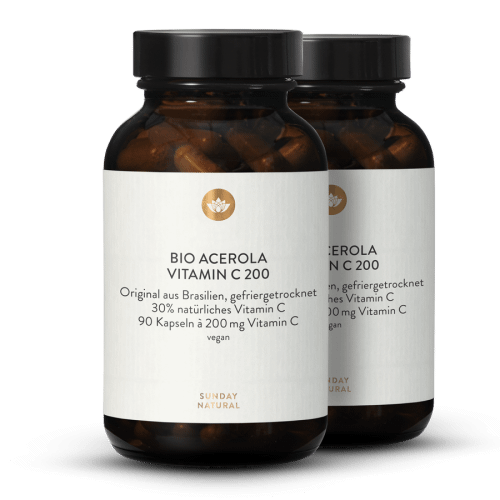
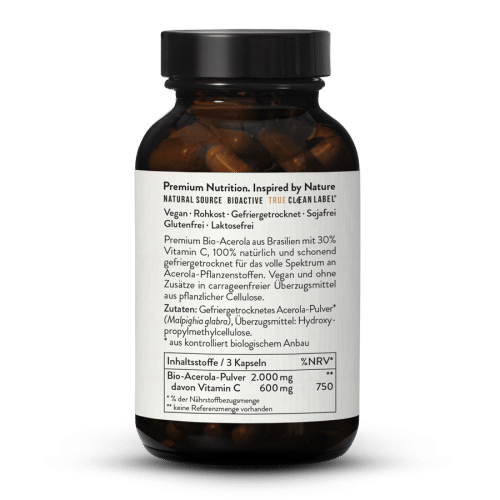
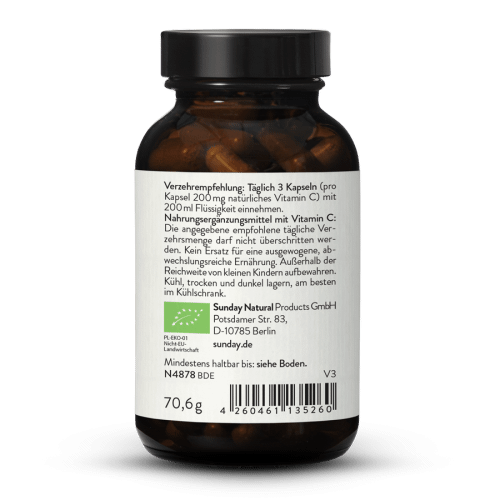
Vitamin C is involved in numerous redox reactions as an antioxidant and cofactor, thus influencing numerous processes in the human body, such as energy metabolism and the immune system, and providing antioxidative protection to cells. It is also involved in the formation of collagen, the structural protein found in skin, cartilage, bones and blood vessels, as well as in the synthesis of hormones.
High concentrations of vitamin C are found naturally in fresh fruits, vegetables and berries such as camu camu, sea buckthorn berry, acerola cherry, rosehip, black currant, kale, parsley, kiwi and citrus fruits, to name a few.
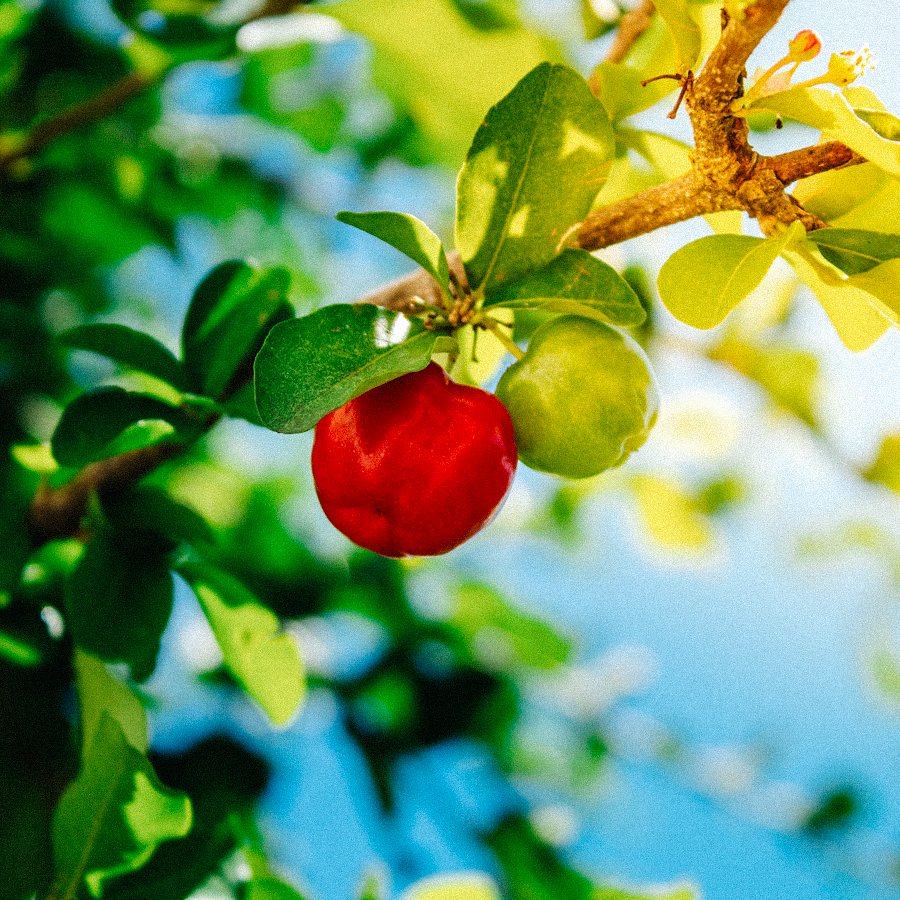
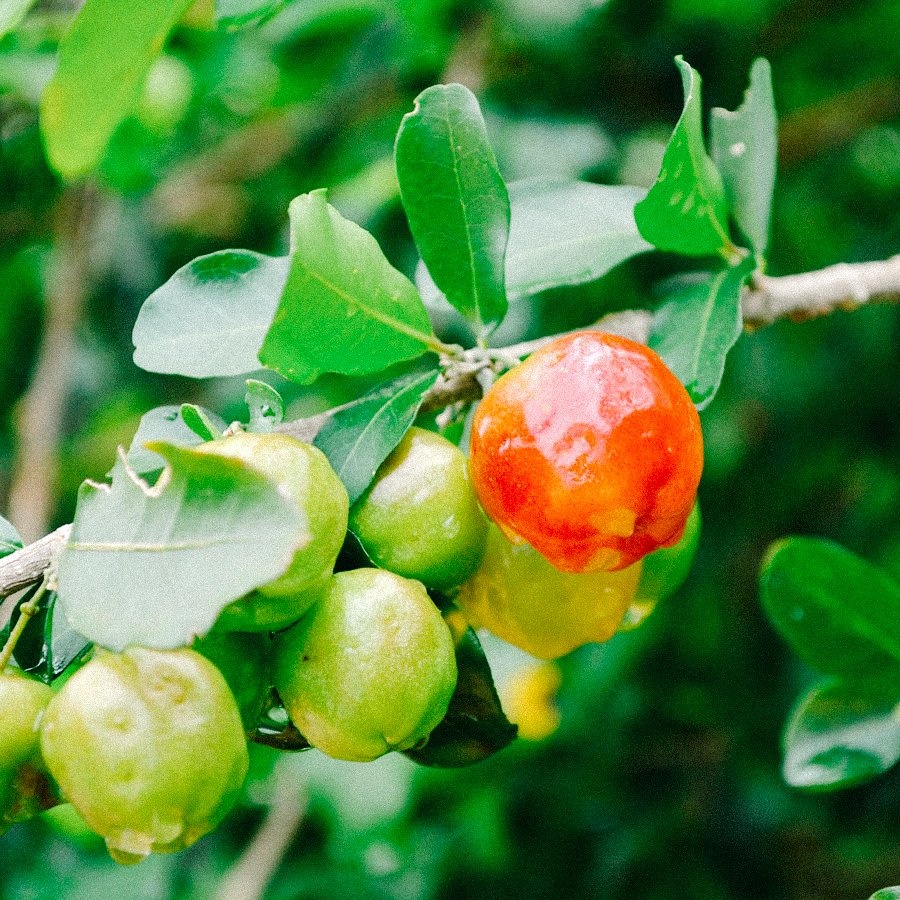
Organic Acerola Cherries
The acerola shrub is native to Central and South America. Its fruits resemble European cherries in appearance, though they are completely unrelated. Acerola grows predominantly along roadsides and riverbanks, but also on dry, rocky mountain slopes at altitudes of up to 1600m. Our organic acerola comes from Brazil, where it is gently freeze-dried immediately after harvest.
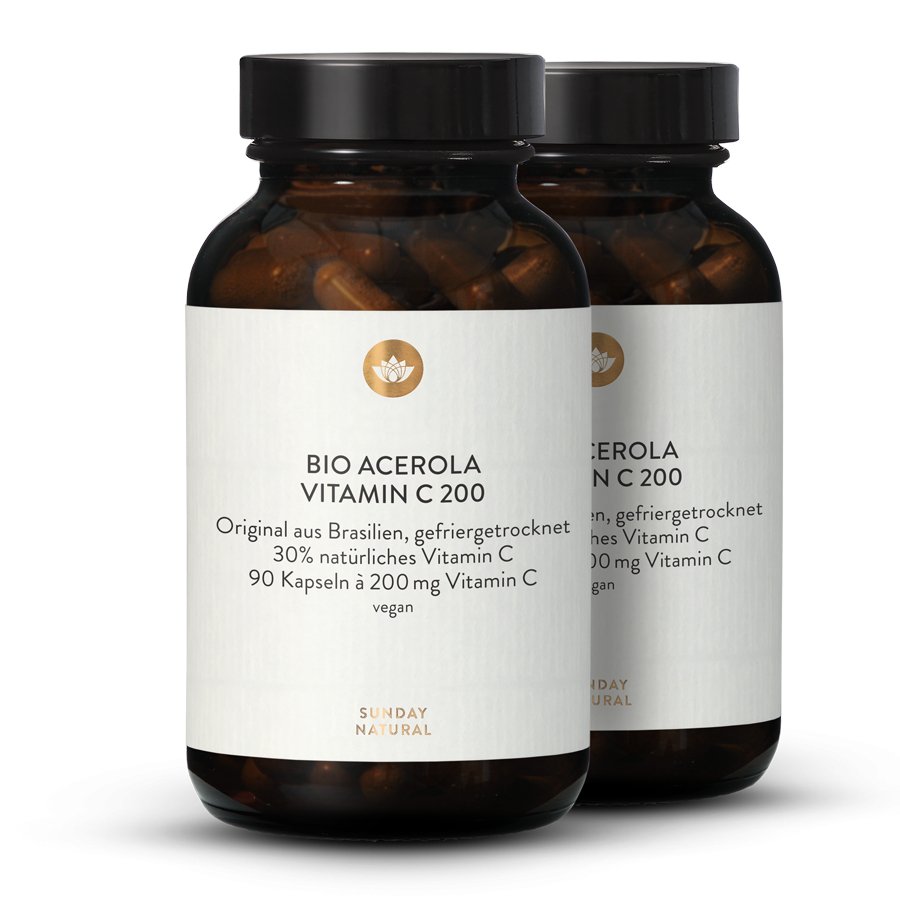
The acerola cherry is renowned for its exceptionally high natural vitamin C content of approximately 1700mg per 100g in the fresh fruit. It is also rich in secondary phytochemicals (flavonoids, anthocyanins) and many other valuable ingredients which, in their natural matrix, further increase the retention time and bioavailability of the natural vitamin C. Through a gentle freeze-drying process, an exceptionally highly concentrated powder with 30% vitamin C is obtained without the addition of questionable extract carriers such as maltodextrin.
Vitamin C continues to be intensively researched, with new mechanisms of action for this fascinating vitamin being discovered almost every year. To date, the following statements on vitamin C have been approved by the EU:
Vitamin C contributes to:
- The reduction of tiredness and fatigue
- Normal mental function
- The regeneration of the reduced form of vitamin E
- Normal energy metabolism
- Normal immune system function
- The normal function of the nervous system
- Protecting cells against oxidative stress
- Normal collagen formation for normal blood vessel function
- Normal collagen formation for normal bone function
- Normal collagen formation for normal cartilage function
- Normal collagen formation for normal dental function
- Normal collagen formation for normal gum function
- Normal collagen formation for normal skin function
- Increasing iron absorption
- Maintaining normal immune system function both during and after intense physical activity