Freshness represents a paramount quality benchmark for premium Omega-3 oils. Due to their molecular structure, Omega-3 fatty acids are inherently highly reactive and susceptible to oxidation (autoxidation), which can lead to rapid rancidity. During the oxidation of Omega-3 fatty acids, primary fatty acid peroxides are formed, which subsequently degrade into secondary oxidation products such as aldehydes (e.g. malondialdehyde and 4-hydroxyhexenal). Measuring these oxidative by-products is therefore essential to guarantee the quality and integrity of Omega-3 supplements.
Three primary metrics are utilised to assess the oxidation of Omega-3 oils: the peroxide value (PV), the p-anisidine value (p-AV), and the TOTOX value. The latter is calculated using the following formula: TOTOX value = p-anisidine value + (2 × peroxide value).
Recognised internationally, the TOTOX (Total Oxidation) value serves as a comprehensive indicator of fatty acid oxidation, providing a clear overview of an oil's freshness. As a general rule, higher TOTOX values correlate directly with increased rancidity. The anisidine value (AV) measures the formation of aldehydes during the oxidation of fats, offering significant insight into how an oil has been processed and stored. Meanwhile, the peroxide value (PV) measures current oxidation levels.
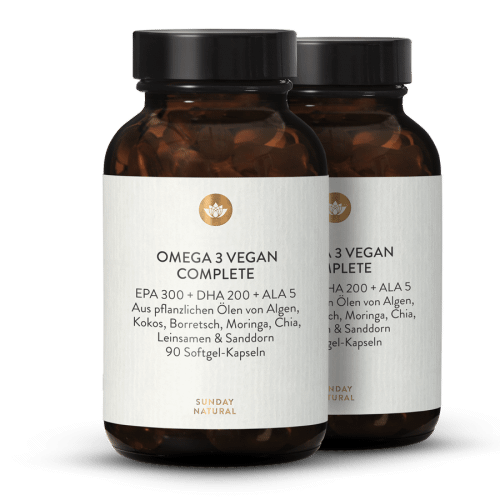
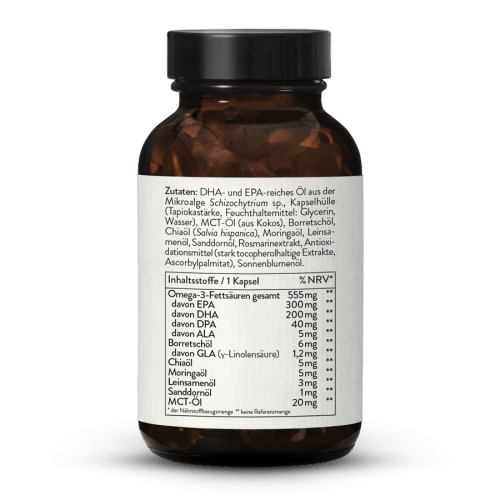
Our Omega-3 products undergo continuous monitoring for anisidine and peroxide levels. Crucially, this testing applies not only to the raw material, as is common industry practice, but also to the final product after it has been encapsulated or bottled. Extreme care is taken during production to eliminate oxygen exposure wherever possible, thereby preventing oxidative degradation. We place particular emphasis on the freshness of our raw materials and the correct storage of the finished product, ensuring that extended storage times are avoided altogether.
Official industry bodies (IFOS, IKOS, GOED, and GMBI) have established that the following maximum limits must not be exceeded:
- Peroxide value (PV): maximum 5 mEq/kg
- Anisidine value (AV): maximum 20
- TOTOX value: maximum 26
Depending on a product’s specific composition, laboratory analysis of the TOTOX value can prove challenging or may be distorted by ingredients such as lemon oil. In such instances, we rely on the measurement and reporting of the peroxide value.
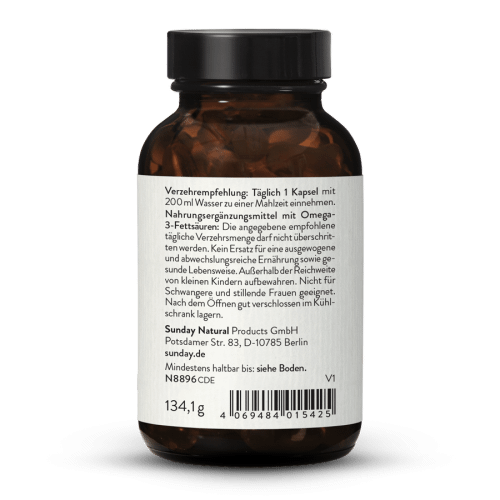
A TOTOX value exceeding 26 indicates that the Omega-3 oil is spoiled and should no longer be consumed. Values below 20 for TOTOX, or below 5 for the peroxide value, signify a fresh and high-quality oil. For optimal preservation, we recommend storing Omega-3 products in a light-shielded environment at the bottom of the refrigerator. Low temperatures significantly slow the oxidation processes of the algae oil—a principle that applies both before and, crucially, after opening the packaging.
Should the taste or aroma of the algae oil deteriorate within this period, it suggests premature oxidation. Factors such as contact between the dosing pipette and the mouth or tongue, as well as improper storage, can trigger this process. Our products consistently maintain levels significantly below the recommended safety limits.